Posted: 4 December 2025
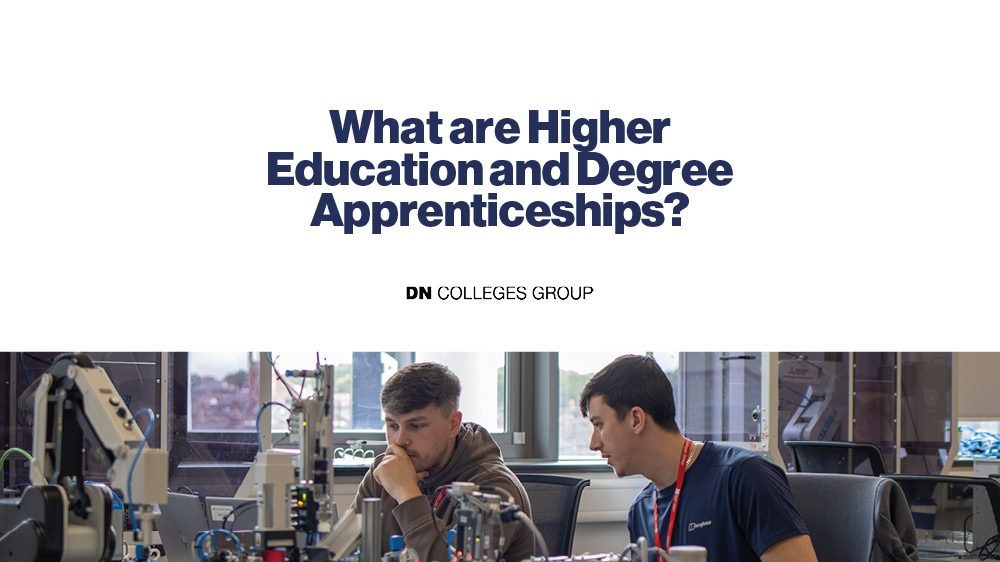
Higher education apprenticeships and degree apprenticeships are becoming one of the most popular ways to gain a university-level qualification while earning a salary. You may know about traditional apprenticeships, but higher education and degree apprenticeships offer a unique route that blends academic study with real workplace experience.
In this guide, we explain what higher education apprenticeships are, how they work, the difference between higher and degree apprenticeships, who they’re for, and the key benefits all to help you decide whether this route is right for you or an employee in your organisation.
Contents:
What are higher education apprenticeships?
How do higher apprenticeships work?
What’s the difference between higher education and degree apprenticeships?
Who are higher apprenticeships for?
What are the pros of a higher education apprenticeship for the apprentice?
What are the pros of a higher education apprenticeship for an employer?
What subjects can you study a higher or degree apprenticeships at University Campus Doncaster?
What Are Higher Education Apprenticeships?
A higher education apprenticeship is a paid, work-based training programme that allows you to study at Levels 4–7, equivalent to the first years of university through to postgraduate study. These programmes combine employment with structured learning delivered by a university or training provider.
Higher apprenticeships and degree apprenticeships can lead to qualifications such as:
- Higher National Certificate (HNC)
- Higher National Diploma (HND)
- Foundation degree
- Level 6/7 professional qualifications
- Degree-level certification
At University Campus Doncaster, higher apprenticeships and degree apprenticeships are designed alongside employers to ensure you gain the skills, knowledge and industry experience that lead to real career progression.
How Do Higher Apprenticeships Work?
Higher apprenticeships follow a blend of workplace training and academic study. Typically, apprentices:
- Work 30+ hours per week in a paid job role
- Attend sessions on campus, online or through blended learning
- Complete coursework and assessments related to their job
- Develop practical skills directly relevant to their industry
- Have their tuition fees fully funded by the employer and government
This means you can earn a salary, avoid student debt, and gain real experience all at the same time.
What’s the Difference Between Higher Education and Degree Apprenticeships?
Although the two are closely related, there are key differences:
Higher Apprenticeship (Levels 4–7)
• May include qualifications like HNC, HND or foundation degrees
• Doesn’t always lead to a full bachelor’s or master’s degree
• Focuses on higher-level professional and technical skills
Degree Apprenticeship (Levels 6–7)
• Includes a full bachelor’s or master’s degree
• Combines university-level study with long-term employment
• Designed with employers to meet industry-specific needs
In short: All degree apprenticeships are higher apprenticeships, but not all higher apprenticeships include a full degree.
Who Are Higher Education Apprenticeships For?
Higher apprenticeships are ideal for:
-
- Students aged 18+ who want an alternative to full-time university
- Employees wanting to upskill or retrain
- Career changers entering a new industry
- Learners who prefer hands-on experience over traditional study
- People who want to progress in their career without taking on student debt
- Employees wanting to fill skill gaps within their organisation by offering training to their employees
Whether you’re just leaving college, already in the workplace, or looking to develop your employees, this route offers a flexible, career-focused way to gain qualifications.
What Are the Pros of a Higher Education Apprenticeship for the apprentice?
Choosing a higher apprenticeship offers a range of benefits:
- Hands-On Learning: Gain real-world experience from day one by applying your skills directly in the workplace.
- Clear Career Progression: Boost your long-term career prospects and open doors to higher-level roles with increased earning potential.
- Enhanced Employability: Achieve industry-recognised qualifications while developing the practical skills, knowledge and experience employers value most.
- No Tuition Fees: Apprenticeships are fully funded, meaning you pay £0 in tuition fees, and you can complete your training without taking on any student debt.
- Earn While You Study: Receive a wage throughout your apprenticeship. Higher and degree apprenticeship employers often offer competitive salaries compared to standard entry-level roles.
- Build Professional Connections: Develop a strong network within your industry, gain access to mentors, and create valuable contacts that can support your future career.
What are the pros of a Higher Education Apprenticeship for an employer?
By choosing to enrol one of your employees on a higher education apprenticeship you can expect:
- Tailored Training: Programmes can be shaped around the specific needs of your business.
- Better Retention: Investing in staff development increases loyalty, engagement and long-term retention.
- Cost-Effective: Apprentices help reduce recruitment costs and contribute to your workforce while training.
- Increased Productivity: As skills grow, apprentices become more efficient and productive in their roles.
- Stronger Reputation: Supporting apprentices boosts your employer brand and helps attract quality candidates.
What Subjects Can You Study Through a Higher or Degree Apprenticeship at University Campus Doncaster?
At University Campus Doncaster we offer a variety of higher education apprenticeships. Popular subject areas include:
Looking to enrol in a higher or degree apprenticeship, or support your employees to upskill? Apprenticeships offer the perfect way to enhance skills, earn while you learn, and close skill gaps within your organisation. Contact us today to discover how our apprenticeship programmes can help you grow your career or business.