

Overview
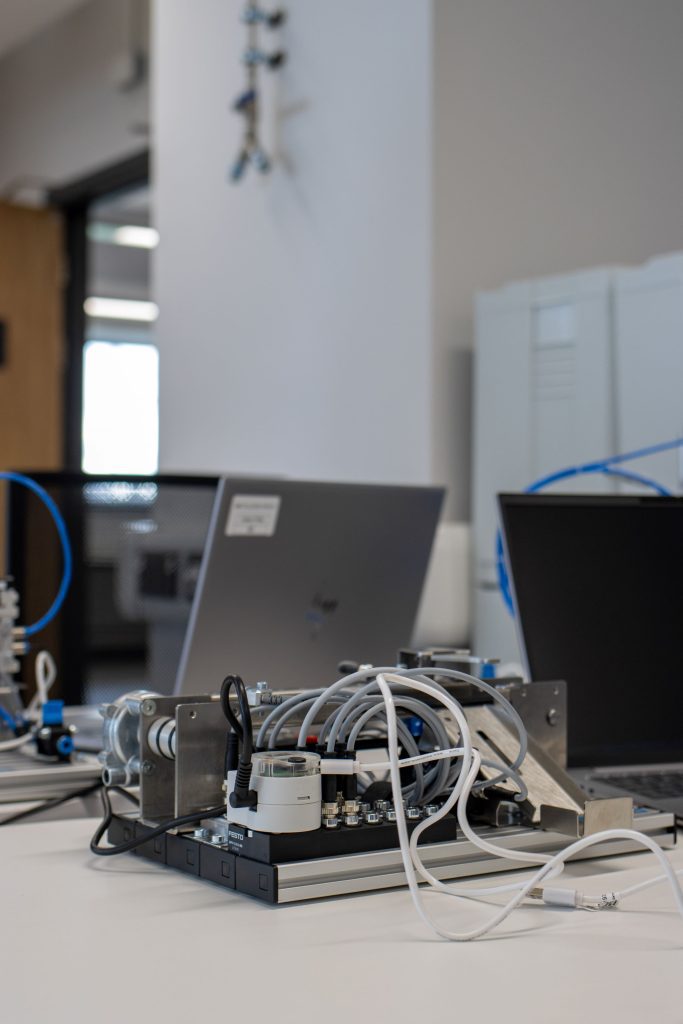
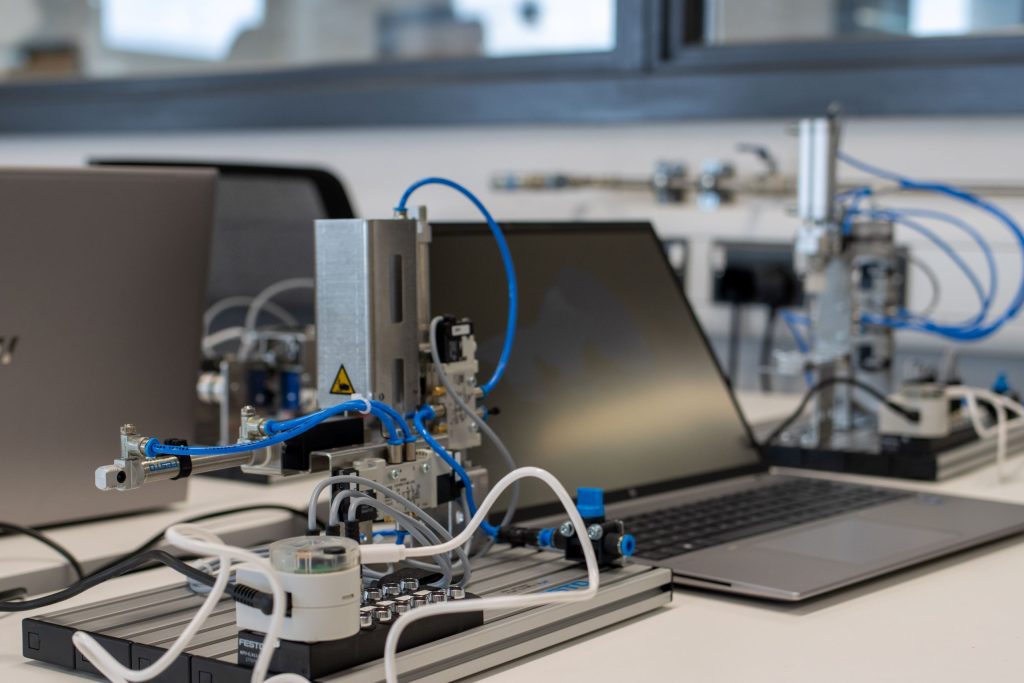
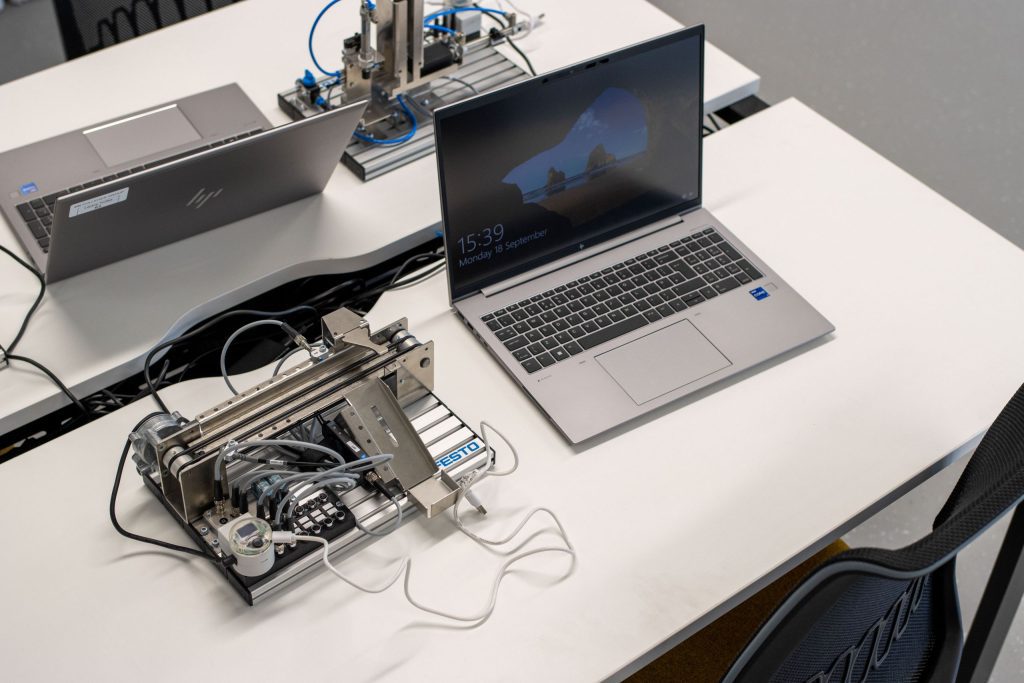
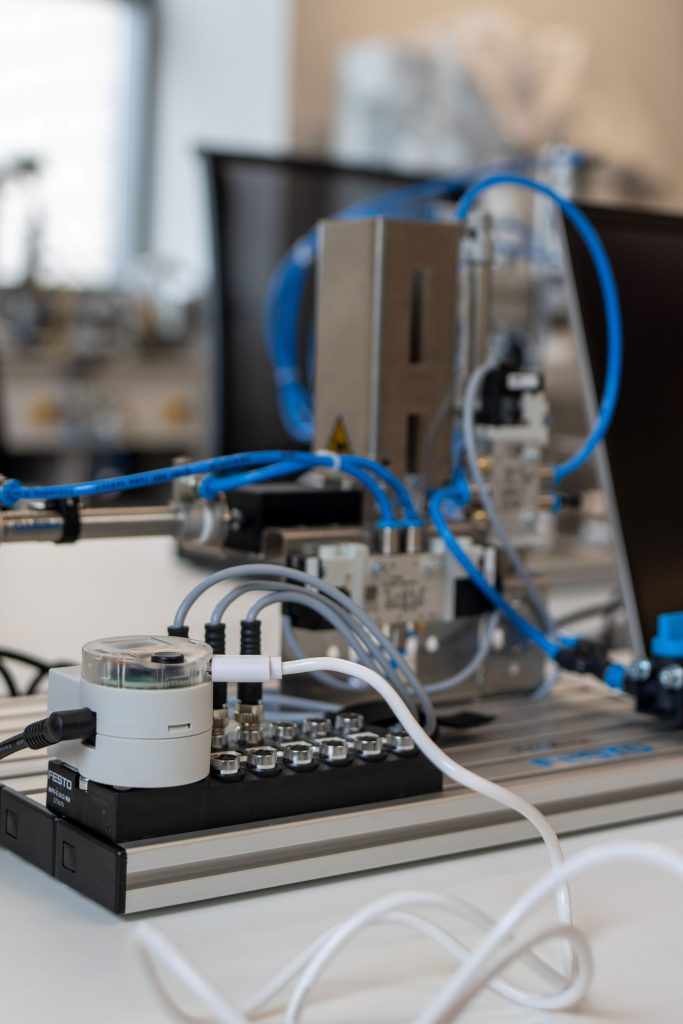
The Introduction to Automation CPD programme focuses on the underpinning engineering concepts that contribute to current industrial practices in automation. The programme provides attendees with the opportunity to gain valuable practical experience using our state-of-the-art laboratories whilst consolidating knowledge through the delivery of interactive theory sessions. Our purpose-built engineering laboratories house a wide range of industry-standard training equipment including Pneumatics, Mechatronics, Robotics, PLCs, Fluid Processing, and a unique Industry 4.0 Smart Factory training system enabling the study of the full range of industrial concepts.
The programme offers a learning experience which has the attendees at its centre with the team focused on providing a friendly and supportive learning environment. The programme is designed in a way that progressively prepares attendees with the knowledge and ability to analyse, comprehend and manage basic automation resulting from the fundamentals of PLC programming to the function and use of automation equipment. This flexibility will be a significant asset for the attendees, because of the continuous evolution of the technologies in the automation sector.
Course Structure
The programme is suitable for technician/operation staff with level 3/4 qualifications (or equivalent industry experience) and apprentices who need retraining as automation systems technicians. Programme learning outcomes are:
- Introduction to industrial automation technical terms.
- Planning, developing, and building automated systems.
- Technical documentation
- Building models and creating simulations.
- Open and closed-loop control systems.
- Pneumatic and electrical actuators, sensors, and controllers.
- Using computers as tools for programming and simulation.
- Be able to detect and eliminate errors in simple automation.
- Be able to investigate PLC Technology.
- Become familiar with the internal architecture of PLCs and their application.
- Be able to explore the typical input and output devices used with PLCs.
- Become familiar with basic programming techniques used with PLCs.
- Be able to develop PLC systems to solve engineering problems.
- Become familiar with how PLCs are used in various industrial applications.
- Become familiar with Solenoid valves.
- Become familiar with Sensor technology.
- Become familiar with Electrical wiring.
- Become familiar with Relay control systems.
- Become familiar with Logic control.
- Become familiar with Control of direct current motors.
- Become familiar with Inductive sensors.
- Become familiar with Optical sensors.
- Become familiar with Polarity reversal circuits.
- Become familiar with programming PLCs in Ladder Diagram (LD).
Assessment Methods
The development of the learning outcomes is promoted through the following teaching and learning methods. Attendees will experience a range of learning strategies during the course. The course tutor will use a variety of teaching and learning methods. These may include:
- On-campus lectures and tutorial sessions
- Video content (typically short 20-minute max. videos to introduce or develop topics within the subject)
- Collaborative learning between attendees facilitated through face-to-face workshops.
- Workshops are used to enable attendees to work on state-of-the-art lab equipment. They also provide good opportunities for developing team-working and communication skills as well as individual skills.
Our partners


Dates for this course
No dates are scheduled at the moment. Register your interest and we'll be in touch as soon as the next course is set.
Entry requirements
What you’ll need
In the ever-evolving landscape of industrial technology, the mastery of automation remains a fundamental cornerstone for technicians and operation staff. With qualifications at level 3/4 or equivalent industry experience, individuals are poised to embark on a journey through the realm of automation, a discipline essential to the smooth functioning of countless industrial processes.
We are committed to creating educational opportunities for people from a variety of backgrounds and situations. If you have been out of formal education for some time, and/or you do not have the qualifications stated, we might still be able to consider your application and offer you a range of support. We are here to help. Please get in touch to find out more.
Gallery
What it costs
£200.00
Additional costs
Your Tuition fees cover most costs associated with your course (including registration, tuition, and assessment).
There may be some extra costs that you might need to make, or choose to pay, for example:
- Books (you’ll have access to books from your module reading lists in the HE library, but you may wish to buy your own copies)
- Printing and photocopying
Where this course can take you
- Before you start
- This course Level 4
- Further study
Check you have what you need in the entry requirements.
Not sure? Talk to us and we will help you find the right starting point.
Careers it can lead to
- Engineering Technicians £39,700 a year
- Electrical and Electronics Technicians £31,000 a year
- Building and Civil Engineering Technicians £30,700 a year
- Science, Engineering and Production Technicians £35,100 a year
See all 11 careers
- Planning, Process and Production Technicians £39,700 a year
With further study or experience
- Engineering Professionals £41,400 a year
- Electronics Engineers £47,700 a year
- Electrical Engineers £55,000 a year
- Production and Process Engineers £44,100 a year
- Civil Engineers £48,200 a year
- Aerospace Engineers £51,100 a year
Typical pay is the UK median for each job (Lightcast, October 2026).
Register your interest in this course
You’re enquiring about Level 4 Introduction to Automation
To ask about this course or book a place, get in touch with the team.
Call 0800 358 74 74 or email ucdonenquiries@don.ac.uk